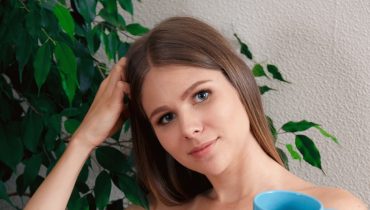
For most of her late twenties, Clara Gray carried her stress quietly, almost politely, the way someone might carry a fragile object they don’t want to drop. On the surface she was composed, steady, capable. She handled deadlines, answered messages promptly, showed up for others, and gave the impression of someone who lived with a naturally calm temperament. But inside, Clara lived with a kind of invisible tension—subtle, persistent, and almost impossible to turn off.
Her chest often felt tight in the afternoons, as though a single deep breath would solve everything if she could only take one without feeling resistance. Her mind, though not chaotic, hummed like an engine that refused to idle. When evenings arrived, she felt exhausted but not relaxed, as if her body hadn’t learned how to shift into rest mode. It wasn’t anxiety in the dramatic sense—it was anxiety as a posture, a shape her inner world had taken over time.
“I wasn’t panicking,” Clara said. “I was bracing. Every day. All day. Even when nothing was actually wrong.”
Like many people, Clara didn’t consider breathing or mindfulness to be real solutions at first. They sounded too simple, almost naïve—like advice printed on a wellness poster. But when her tension eventually began manifesting physically—sleep disturbances, jaw tightness, early-morning heart pounding—she realized she needed guidance that didn’t involve medication or suppressing symptoms. She needed to relearn how to inhabit her own body.
Her transformation began not with a dramatic intervention but with something far quieter: five minutes of intentional breathing. This single shift opened a door she didn’t know existed, leading her deeper into mindfulness practices that helped her regulate stress, calm her nervous system, and rebuild an inner stability she had lost somewhere along the way.
Her story is not about instant peace. It is about the slow, precise process of retraining a body that has forgotten how to feel safe. It is about understanding why breathing matters, why mindfulness is more than a trend, and how both can become tools for restoring calm from the inside out.
The moment she realized her breathing was working against her
Clara’s doctor once asked her a seemingly trivial question: “When was the last time you took a deep breath without forcing it?” She couldn’t answer. She had spent years breathing in shallow, small sips of air, the kind of respiratory pattern common among people who live with constant low-level stress. Her nervous system had normalized this pattern to the point where deep breathing felt unnatural.
Chronic stress often shortens the breath, and shortened breath signals to the body that it should remain alert. This creates a feedback loop: shallow breathing increases stress signals, and stress signals make breathing even shallower. Clara lived inside this loop without realizing it.
That conversation prompted her to look more seriously into the science behind breathwork. She learned that slow, controlled breathing influences the vagus nerve, the parasympathetic nervous system, and the heart’s relaxation response. She found a particularly helpful article from Harvard Health Publishing explaining how controlled breathing can physiologically slow the body’s stress response. She saved the article, reread it, and for the first time realized that breathwork wasn’t fluff—it was biology.
Understanding this shifted her mindset. She stopped seeing mindful breathing as a soft, emotional practice and began seeing it as a neurological one.
Where mindfulness entered the picture
Clara didn’t begin with formal meditation. It felt too intimidating—too silent, too vast, too confrontational. Instead, she started with what she called “micro mindfulness”: bringing her attention to small experiences throughout the day. The warmth of her tea. The sensation of her feet on the ground. The rhythm of her steps. The texture of her breath moving through her ribs.
These small acts weren’t about clearing her mind or achieving enlightenment. They were about reminding her body that it didn’t need to anticipate the next moment, that the present was safe enough to occupy fully. In this way, mindfulness became less of a technique and more of a recalibration. It taught her nervous system that she could exist without bracing.
As she became more comfortable with presence, Clara realized how often she lived in partial awareness—drinking coffee while thinking about a meeting, showering while rehashing a conversation, lying in bed while planning for the next morning. Mindfulness gave her permission to reclaim the moments she had been skipping over for years.
How breathing became a doorway rather than a task
When Clara first tried actual breathing exercises, she approached them mechanically. Inhale for four seconds, exhale for six, try to slow the heart rate. But over time, she realized that breathwork was not a performance. It was a conversation between the mind and the body—a way of saying, “You are allowed to soften now.”
The shift happened one quiet evening. She sat on her bed, placed a hand over her sternum, and breathed in slowly. This time she noticed something she had never paid attention to: her ribs expanding sideways, her belly rising more easily, the subtle moment at the top of the inhale where the body pauses before releasing. That moment of pause felt like a door she had never entered before. It held stillness, safety, and a feeling she could only describe as “permission.”
From that evening forward, breathing was no longer something she did out of obligation. It became an invitation—one she accepted increasingly often.
The emotional unlearning that followed
As Clara’s breath slowed, she began noticing the emotional patterns attached to her tension. She realized she often held her breath when she felt the need to be competent, composed, or emotionally strong for others. She noticed that her breath became shallow when she anticipated conflict, even if no conflict happened. She recognized that she had trained her body to stay vigilant in moments where safety was never threatened.
Mindfulness gave her the awareness to see these patterns. Breathing gave her the tool to interrupt them.
The more she practiced, the more her internal landscape changed. Situations that once tightened her chest now passed through her without gripping. Even when challenges arose, her body no longer responded as though they were emergencies. She still experienced stress, of course, but it didn’t anchor itself inside her the way it once had.
She described the change perfectly: “I didn’t become calmer overnight. I became calmer breath by breath.”
How mindfulness reshaped her evenings
One of the most profound shifts in Clara’s experience happened during the evenings, a time when her mind used to accelerate. Before mindfulness, she treated evenings as a final sprint. Catch up on messages. Finish small tasks. Review the next day. Even small responsibilities took on a sense of urgency she could never articulate or justify.
Breathwork slowed this momentum. It reminded her that the day was allowed to end. Instead of diving into her nighttime routine with a mind full of incomplete thoughts, she began pausing before everything. Before brushing her teeth. Before preparing her bedroom. Before turning off the lights. She created deliberate stillness between actions, and her mind gradually mirrored these pauses.
Sleep became less of a battle and more of a descent. Her nervous system entered night mode earlier. Her chest loosened. Even her dreams softened.
The long-term transformation
Months later, Clara realized that mindfulness and breathing had done something she never expected: they gave her back the inner stability she thought she had lost permanently. Stressful situations no longer left lingering tremors in her body. Her thoughts regained clarity. Her emotions felt spacious, not compressed. Conversations became easier, because she no longer entered them with a nervous system already on high alert.
Most importantly, she stopped living in the future. Her breath anchored her to the moment she was actually in—a moment she realized she had been missing for years.
Clara’s quiet advice
If there is one message Clara offers anyone exploring mindfulness or breathing exercises, it is this: calmness is not the absence of stress—it is the ability to return to yourself. Breath by breath. Moment by moment. Gently. Without force.
Breathing is not a technique you master. Mindfulness is not a discipline you perform. They are both ways of remembering what your body has known all along: tension is not your natural state. Stillness is always available, even when you feel far from it. And the path back to it is never dramatic. It is slow, compassionate, and built on practice, not perfection.
“My breath didn’t change my life in one moment,” Clara said. “But it changed every moment of my life.”